Category: Moderation

  • Europe for sale?

    With as many as 12 million(!) parcels shipped every day by third country e-commerce platforms to European consumers, Europe is facing a tsunami of imports that do not comply with EU product-safety rules, labour laws, taxation rules or environmental obligations. On December 1st 2025, the EU Consumer Day organised by the European Economic and Social Committee (EESC) pointed to the urgent need to protect EU markets from an avalanche of cheap imports shipped by third-country e-commerce platforms which are threating to devastate the European economy and sociaty, forcing European businesses to close and draining billions from public budgets.
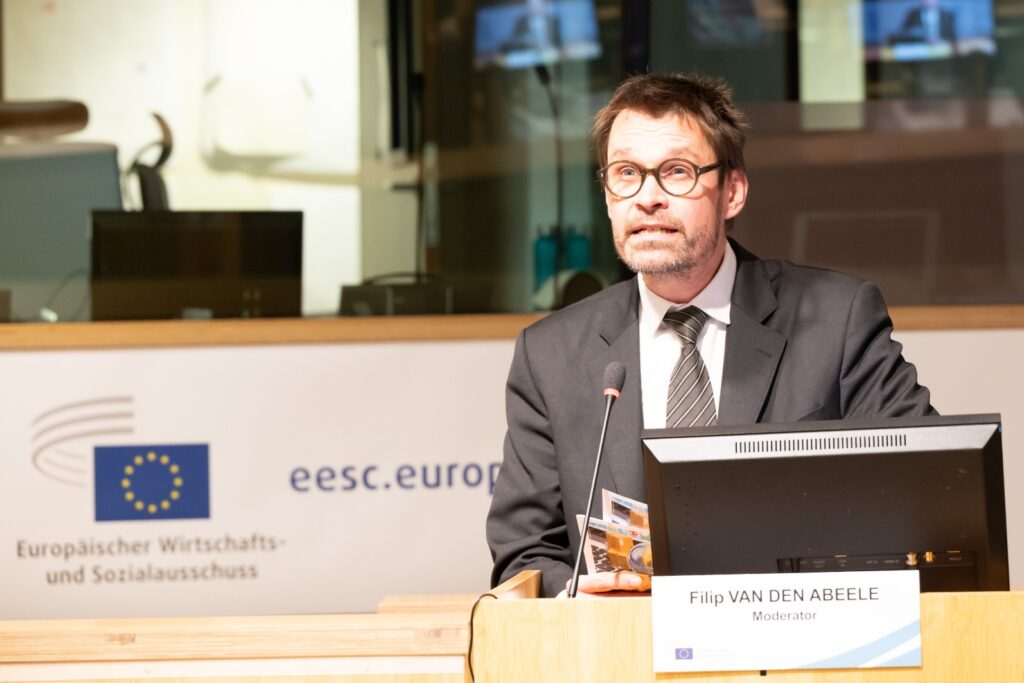
    As Master of Ceremony, I was priviliged to introduce our High Level keynote speakers for the plenary opening session:

    • Séamus Boland, President of the EESC, called for urgent action, including EU customs reform and stronger enforcement of existing rules
    • European Commissioner Michael McGrath outlined the action plan to address the exponential increase in low-price goods shipped from outside the EU
    • Anna Cavazzini, Member of the European Parliament and IMCO Chair, called for an EU-wide market ban on products that seriously and persistently breach EU law

    Our keynote speaker Simo Hiilamo (who is Director for Public Policy and Advocacy at the Finnish Commerce Federation) painted a rather grim picture of the battle we are fighting by sharing some brutally honest truths:

    • The volume of small goods flowing from China has increased explosively, turning into a sheer deluge
    • Third-country e-commerce avoids the costs and regulations that apply to shops operating in the EU, creating unfair competition and jeopardizing a level playing field
    • Complying with product safety introduces significant costs, which can add up to 30-40% of the product price
    • Massive imports of Chinese junk decrease the tax revenues of European Member States
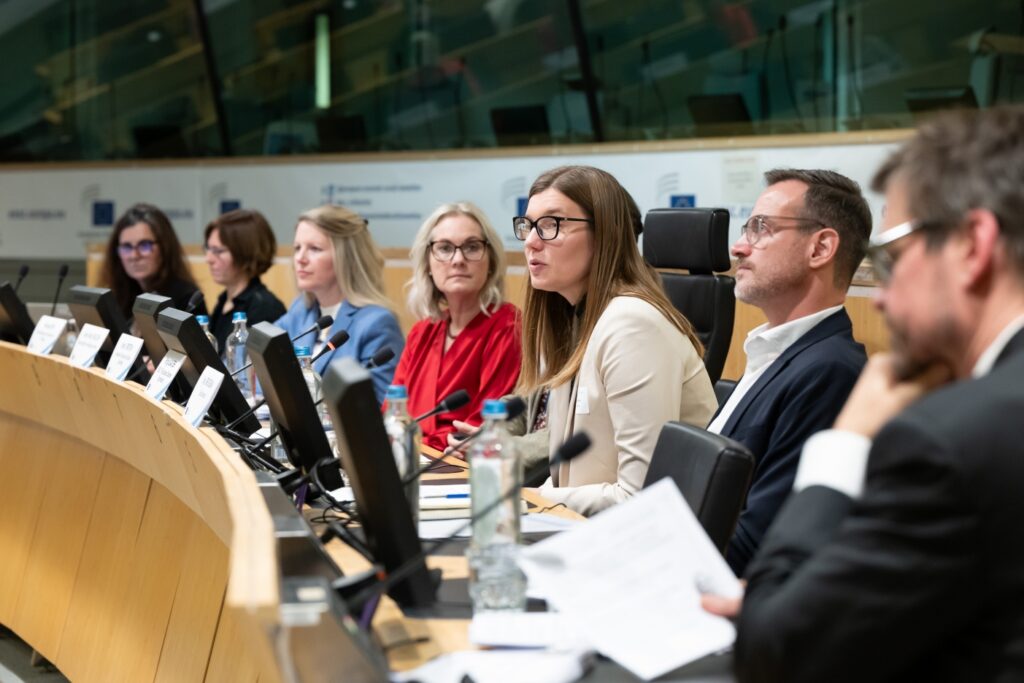
    Antje Gerstein, rapporteur on the ‘Call for Fair Competition with regard to Third Country Platforms’ painted the canvas for our first panel where I explored how we could step up on EU law enforcement together with

    • Ilya Bruggeman, Director for Digital, Single Market and Consumer Policy at EuroCommerce
    • Patrycja Gautier, Head of Consumer Rights at the European Consumer Organisation BEUC
    • Karen Dahln Nielsen, Head of Policy at the Danish Safety Technology Authority
    • Manuella Péri, Deputy Head of the Consumer Law Unit at DGCCRF
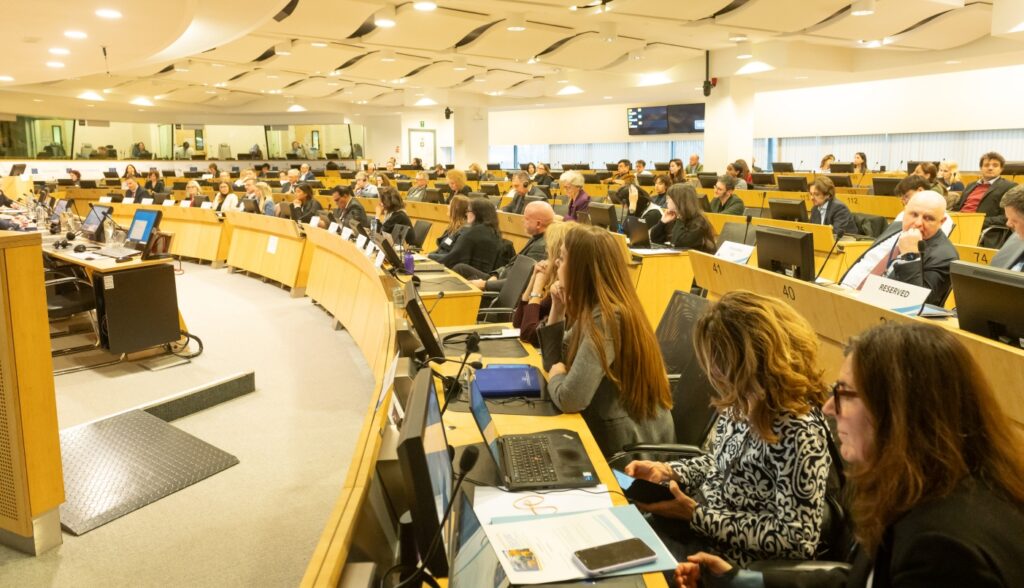
    To provide food for thought for our second round table discussion, Jens Henriksson highlighted the impacts of non-compliant global platforms beyond product safety and unfair commercial practices. I tried to digest his longlist of often overlooked consequences (ranging from shifts in market structure over limited circularity to deteriorating labour conditions) with my panel members

    • Stephen Russel, Director-General at ANEC, the European consumer voice in standardisation
    • Eva Bille, Head of Circularity at the European Environmental Bureau
    • Tomas Prouza, President of the Czech Trade and Tourism Association
    • Annika Flaten, Director of Commerce and Tourism at UNI Europa

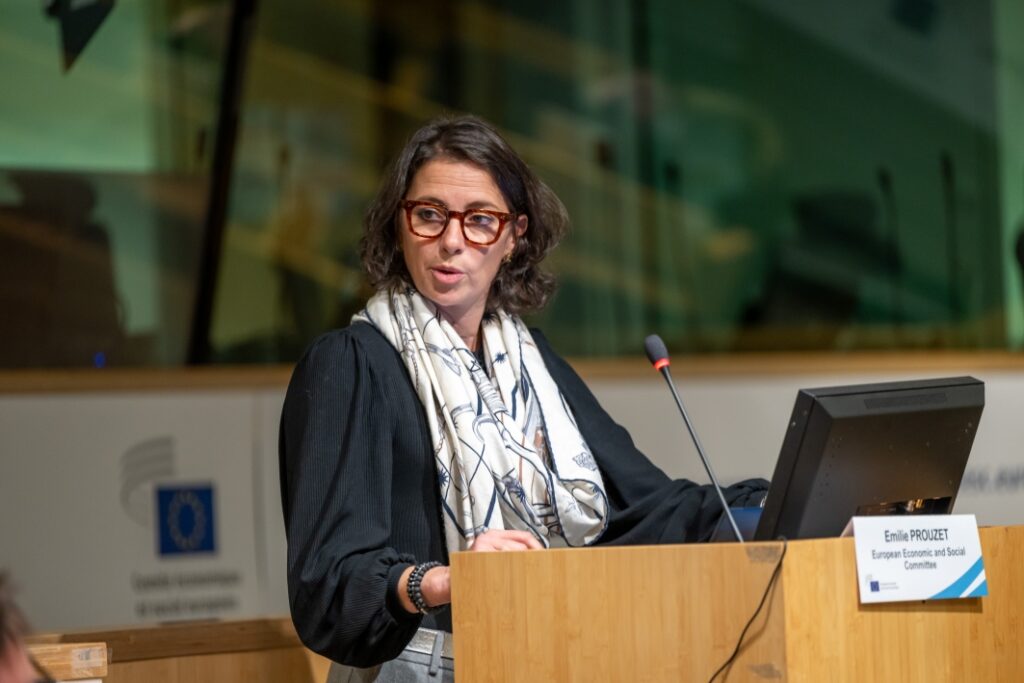
    After such a rich and thought-provoking program, I was delighted (and a little bit relieved 😅) that Emilie Prouzet eloquently summarized the key take-aways in only 5 words:

    1. urgency
    2. volume
    3. common
    4. environment
    5. solutions

  • Kick-starting Carbon Capture and Storage

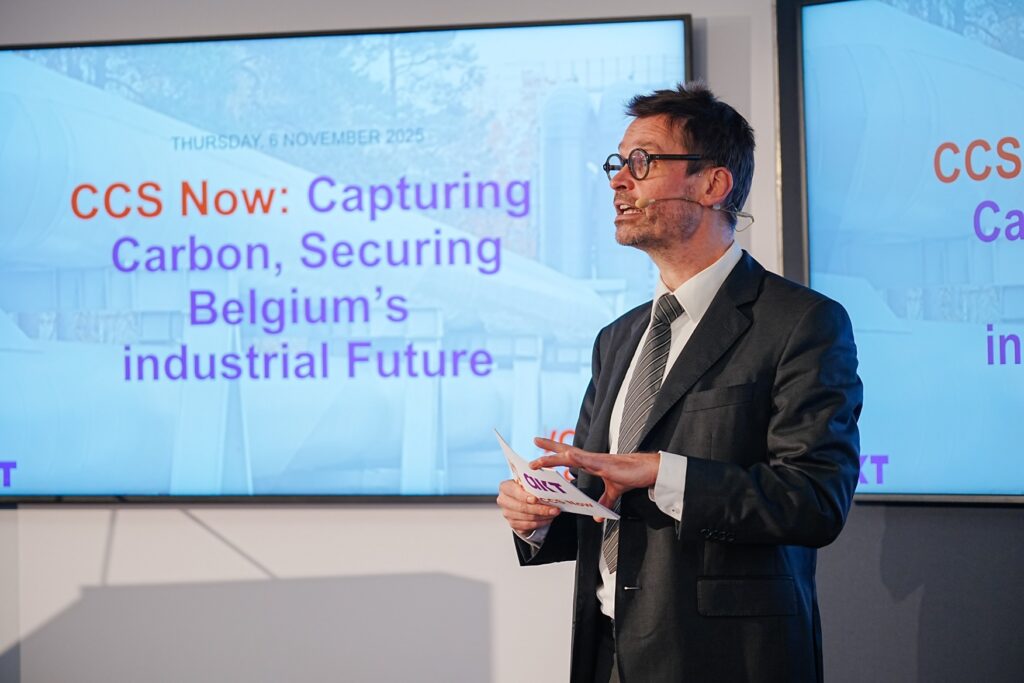
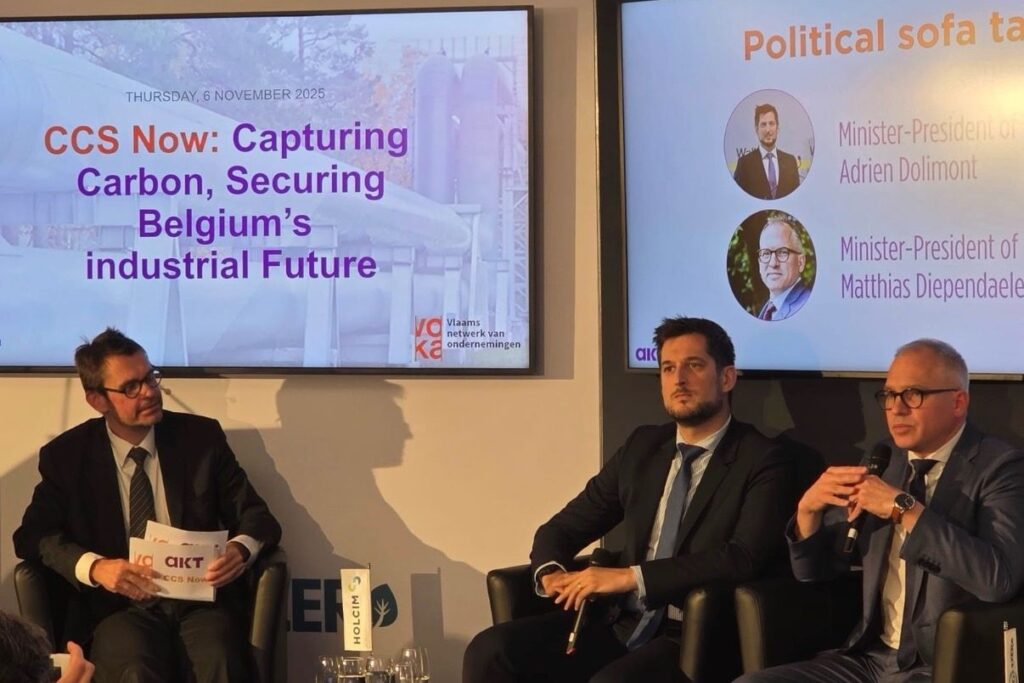
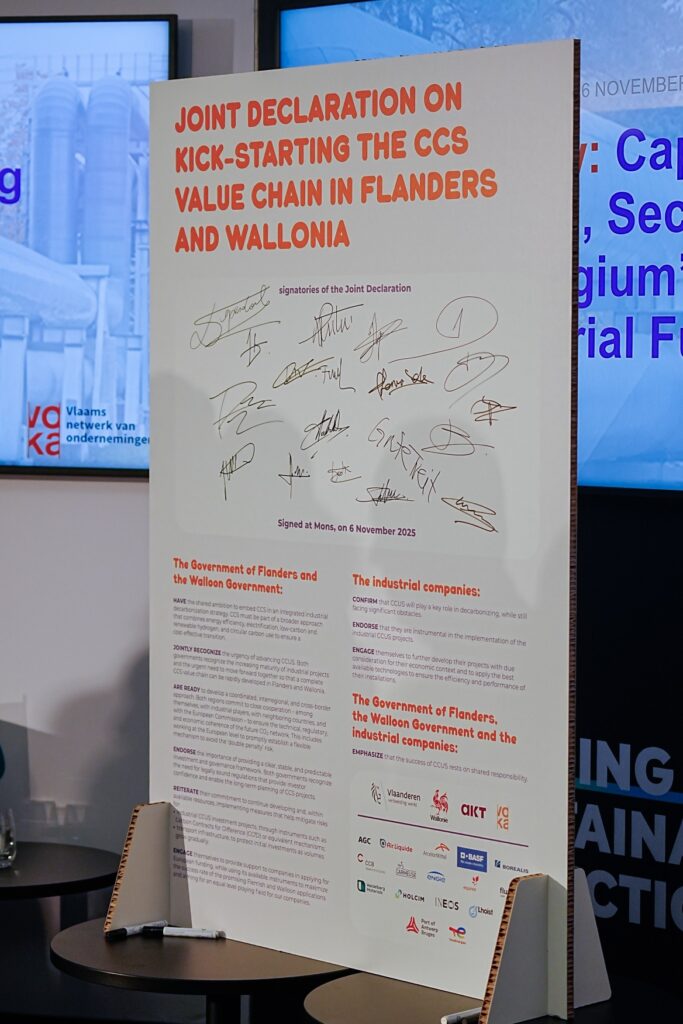
    November 6th marked a historical day at Holcim Belgium, where VOKA, AKT and the Minister Presidents of both Flanders and the Walloon Region signed the Joint Declaration to Kick-Start the Carbon Capture and Storage (CCS) Value Chain in Belgium. This declaration paves the way for support schemes and risk mitigation measures that enable viable CCS projects and thus can unlock a potential of up to 7.5 Mtpa of CO2 reductions!

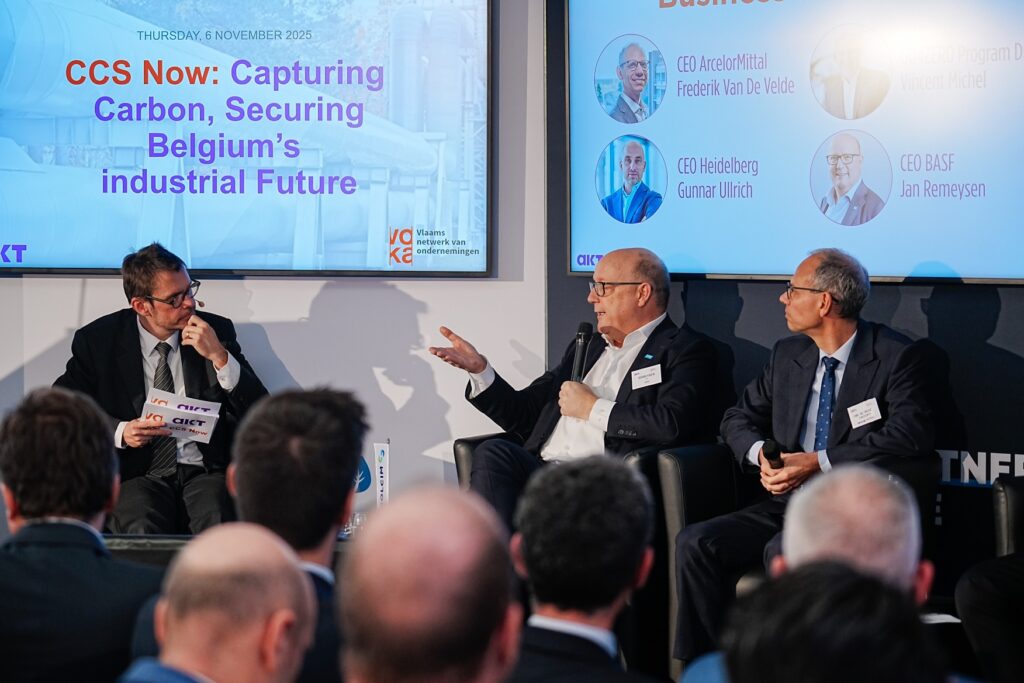
    As Master of Ceremony of this ‘CCS Now!’ event, I enjoyed the privilege of hosting three sofa talk sessions. In the first panel, I had the opportunity to discuss the challenges that currently deter Final Investment Decisions on CCS projects with four Captains of Industry, representing the hard-to-abate sectors. The main messages voiced by the CEOs of ArcelorMittal, BASF, Holcim and Heidelberg read:

    • To provide price certainty, we must tackle the funding gaps between CCS costs and ETS pricing through de-risking measures such as Carbon Contracts for Difference
    • The double penalty risk that currently deters industrial investments must be addressed
    • We should ensure competitive and predictable transport tariffs through coordinated infrastructure de-risking

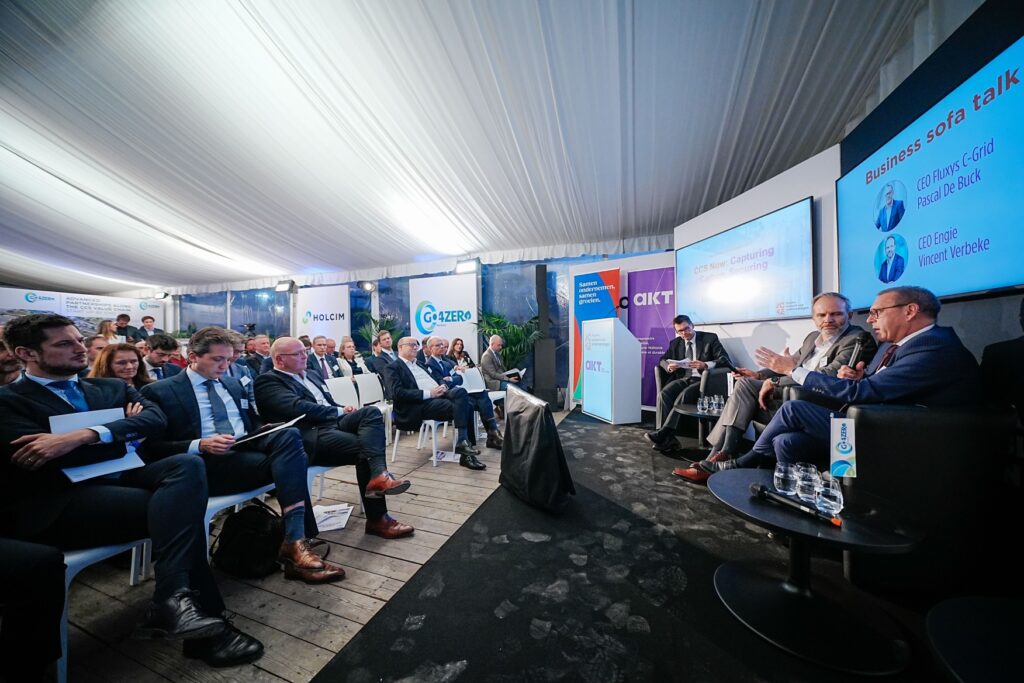
    The second panel addressed the latter point, focusing on the role of infrastructure and the need for volume aggregation. As an educated pipeline engineer, I enjoyed discussion the need for dense phase carbon dioxide transport pipelines to design a robust CO2 backbone with Pascal De Buck, CEO of Fluxys. I could also pick the brain of Vincent Verbeke (CEO of Engie Belgium) on cross-border connections, spatial planning, and permitting. This sharp and concise discussion taught me that

    • Investment in a strategic CO2 infrastructure is a no-regret if Belgium wants to realize its ambition of becoming a CO2 hub within Western Europe
    • Speed is instrumental, and volume aggregation is key to unlock the benefits of an economy of scale, and
    • We need regulatory alignment between the regions in order to kickstart the Belgian CCS market

    During the closing political panel, I did not miss the opportunity to pass on these messages to Matthias Diependaele (MP of Flanders) and Adrien Dolimont (MP of Wallonia). Both leaders indicated that they support the industry in its choice to decarbonize by focussing on technologies such as CCU and CCS, also acknowledging the need for significant long-term investments in a high-risk environment. The governments of Flanders and the Walloon Region voiced their strong support for CCS, joining forces to position our regions as an indispensable CO2 hub in North-West Europe.

    The ‘CCS Now!’ event culminated in signing the Joint Declaration to kick-start the Carbon Capture and Storage value chain in Belgium, where 17 companies confirmed that CC(U)S will play a key role in decarbonizing the industry. These signatories are instrumental in the implementation of industrial CCS projects:

    • AGC
    • Air Liquide
    • ArcelorMittal Belgium
    • BASF
    • Borealis
    • Carmeuse
    • CCB Cementir
    • Engie
    • Equinor
    • Fluxys C-GRID
    • Heidelberg
    • Holcim
    • INEOS
    • Lhoist
    • North Sea Port
    • Port of Antwerp-Bruges
    • TotalEnergies

    I wholeheartedly believe this Joint Declaration marks an important step towards meeting the European climate targets while safeguarding the industrial base, jobs, and future competitiveness of our Belgian industry.

  • MASCO makes circular business models viable

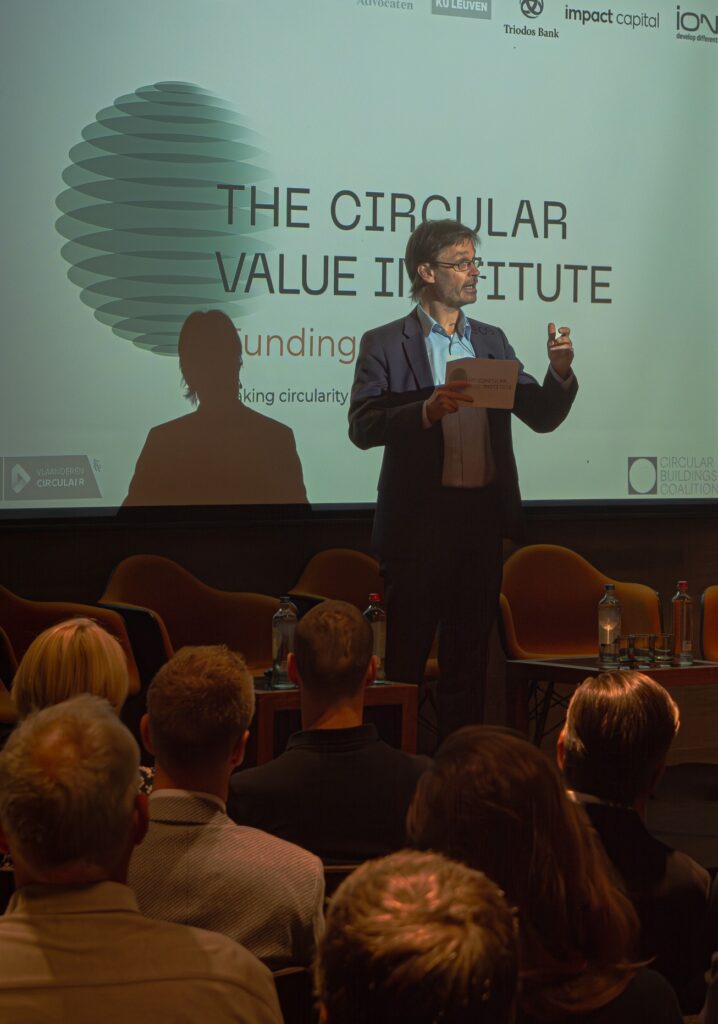
    On September 11th, we gathered a full house at the wonderful Warande in Brussels for the closing event of the #MASCO Living Lab, supported by VLAIO. After 3 years of co-creation between real estate, designers, finance, legal and sustainability experts, the project partners proudly presented their “Materials-as-a-Service Company”.

    • Chris Van de Voorde (Founder of JUUNOO) introduced the Circular Value Index and explained how we can make circular materials a profitable and tradable asset class.
    • Sofie Rapsaet guided us through the MASCO framework and showed how you can innovate by pursuing circular business models in the construction industry.
    • Stefaan Quinart demonstrated with his trademark back-of-the-envelope calculations that circular business models can be economically viable indeed.
    • Marian Rapsaet convincingly showed that the #MASCO fits neatly within the current legal framework, and
    • Carolin Spirinckx highlighted the ecological perspective, by showing the results of a Multi Life Cycle Analysis

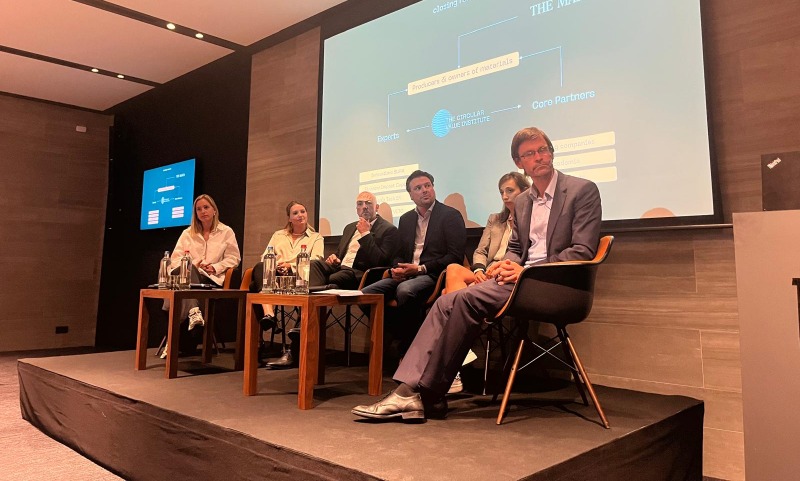
    After the plenary session, I moderated a round table discussion where different tangible examples of circularity in the construction industry were highlighted by all stakeholders across the value chain, including Wienerberger, Owens Corning, ntgrate and Beneens.

    The results of the MASCO Living Lab were loud and crystal clear. Circularity pays off: ecology and economy can go hand in hand, reinforcing one another!

  • Celebrating the unsung heroes of European product safety

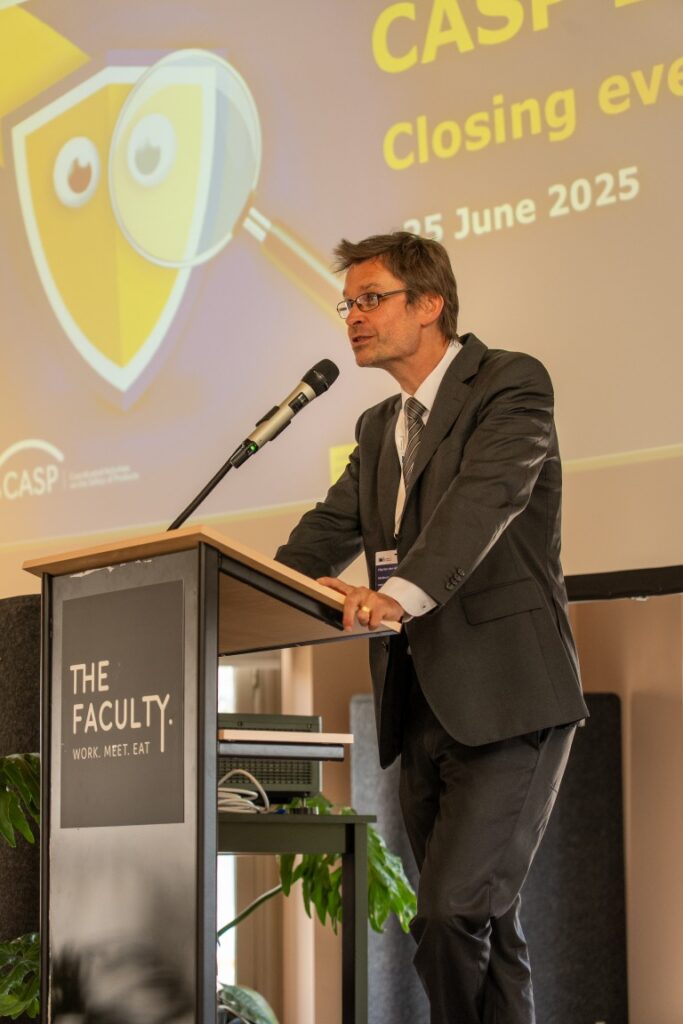
    During the #CASP2024 closing event in Brussels on June 25th, we celebrated the many unsung heroes that keep a careful eye out for European consumers, making sure that only safe products reach the single market.

    I was impressed by the hard an diligent work performed by the Market Surveillance Authorities and the DG-JUST Product Safety Team of the European Commission:

    • The Grand Total of 656 products tested; including baby soothers, high chairs, lighting chains, electric heaters, e-cigarettes, bicycles and slime toys
    • No less than 387 corrective measures taken during the CASP2024 program

    While enforcing the General Product Safety Regulation, market surveillance authorities are identifying unsafe products and mitigation risks.

    However, when specific European standards are not available, safety assessment must rely on alternative methods, e.g. refer to standards for similar or related products.

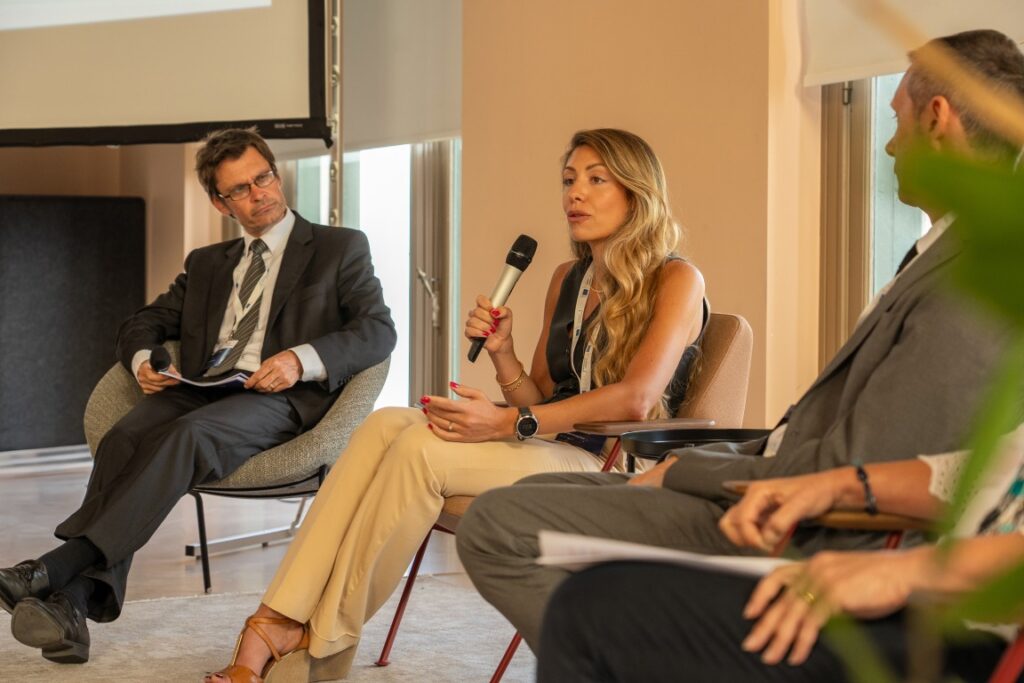
    I had the privilege of moderating a panel discussion on the use of standards by analogy, picking the brains of

    • Marie Gérardy, Legal and Policy Officer at DG-JUST at the European Commission
    • Igor Gallo, representing Camera di commercia di Torino
    • Tania Vandenberghe, Senior Program Manager at ANEC, the European voice in standardization

    During our round table discussion, we explored the main outcomes of this Horizontal Activity on standardisation in the CASP2024 program:

    • A longlist of products currently not covered by any European standard
    • A handbook on the use of standards by analogy
    • A compilation of ten tangible case studies

    There’s much more than meets the eye, and a lot of efforts by these noble professionals are taking place below the waterline… So I for one am wholeheartedly convinced it is justified – if not required – that we grant those silent shepherds of European Product Safety a strong and clear voice!