With as many as 12 million(!) parcels shipped every day by third country e-commerce platforms to European consumers, Europe is facing a tsunami of imports that do not comply with EU product-safety rules, labour laws, taxation rules or environmental obligations. On December 1st 2025, the EU Consumer Day organised by the European Economic and Social Committee (EESC) pointed to the urgent need to protect EU markets from an avalanche of cheap imports shipped by third-country e-commerce platforms which are threating to devastate the European economy and sociaty, forcing European businesses to close and draining billions from public budgets.
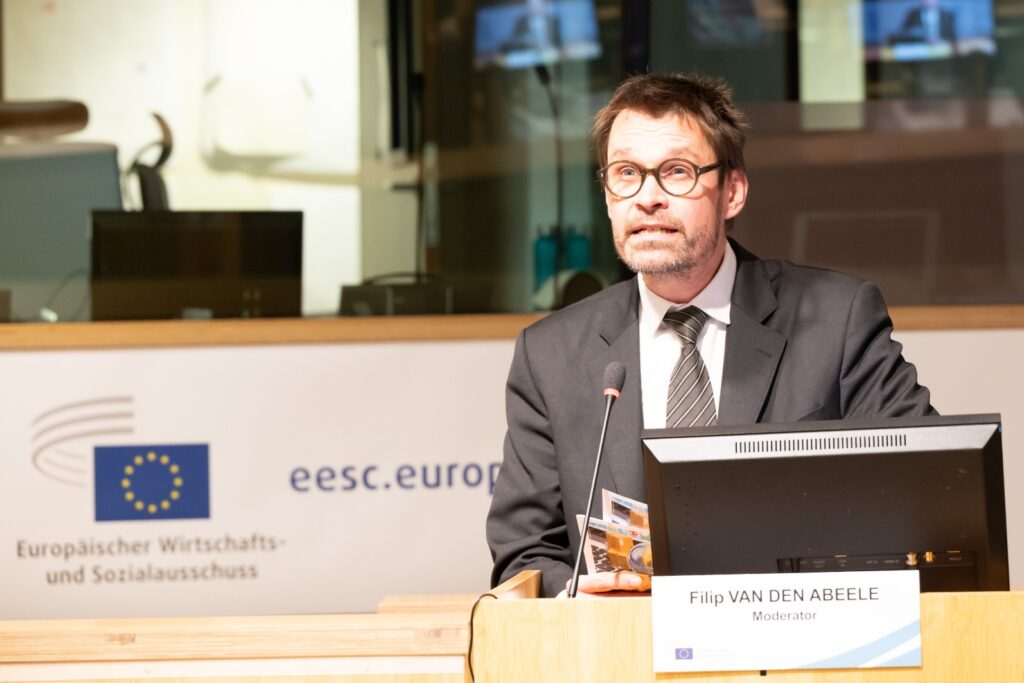
As Master of Ceremony, I was priviliged to introduce our High Level keynote speakers for the plenary opening session:
- Séamus Boland, President of the EESC, called for urgent action, including EU customs reform and stronger enforcement of existing rules
- European Commissioner Michael McGrath outlined the action plan to address the exponential increase in low-price goods shipped from outside the EU
- Anna Cavazzini, Member of the European Parliament and IMCO Chair, called for an EU-wide market ban on products that seriously and persistently breach EU law
“We have a robust framework that requires full compliance, and we have a clear vision of measures that aim to strengthen both existing protections but also future enforcement. These efforts inspire confidence that the safety and wellbeing of EU consumers is protected, and that fair competition between compliant businesses can thrive across the single market.”

Our keynote speaker Simo Hiilamo (who is Director for Public Policy and Advocacy at the Finnish Commerce Federation) painted a rather grim picture of the battle we are fighting by sharing some brutally honest truths:
- The volume of small goods flowing from China has increased explosively, turning into a sheer deluge
- Third-country e-commerce avoids the costs and regulations that apply to shops operating in the EU, creating unfair competition and jeopardizing a level playing field
- Complying with product safety introduces significant costs, which can add up to 30-40% of the product price
- Massive imports of Chinese junk decrease the tax revenues of European Member States
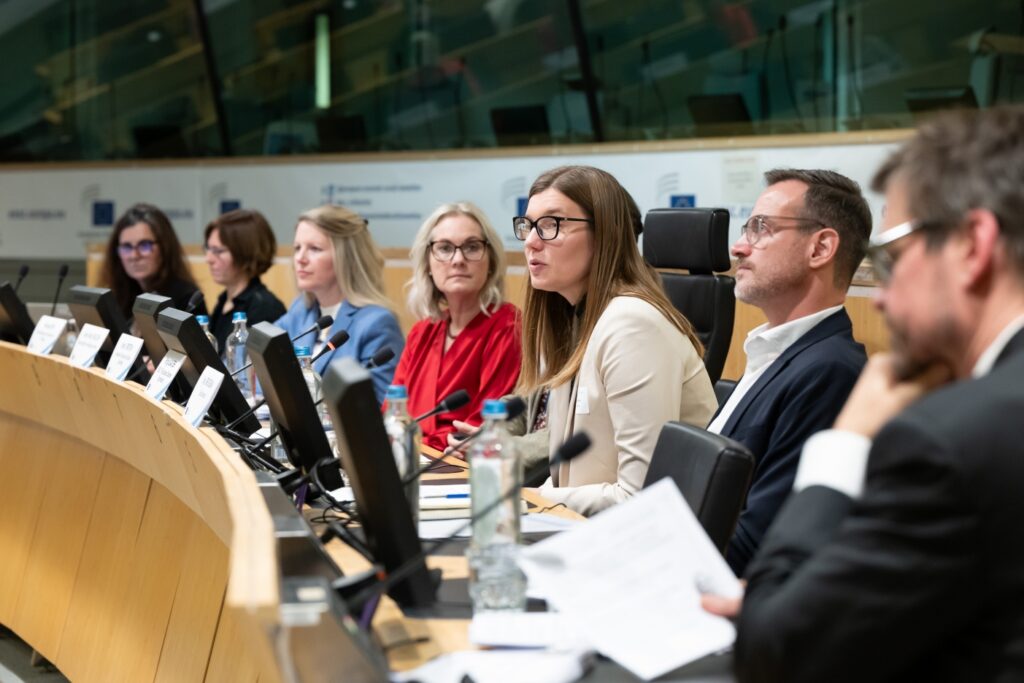
Antje Gerstein, rapporteur on the ‘Call for Fair Competition with regard to Third Country Platforms’ painted the canvas for our first panel where I explored how we could step up on EU law enforcement together with
- Ilya Bruggeman, Director for Digital, Single Market and Consumer Policy at EuroCommerce
- Patrycja Gautier, Head of Consumer Rights at the European Consumer Organisation BEUC
- Karen Dahln Nielsen, Head of Policy at the Danish Safety Technology Authority
- Manuella Péri, Deputy Head of the Consumer Law Unit at DGCCRF
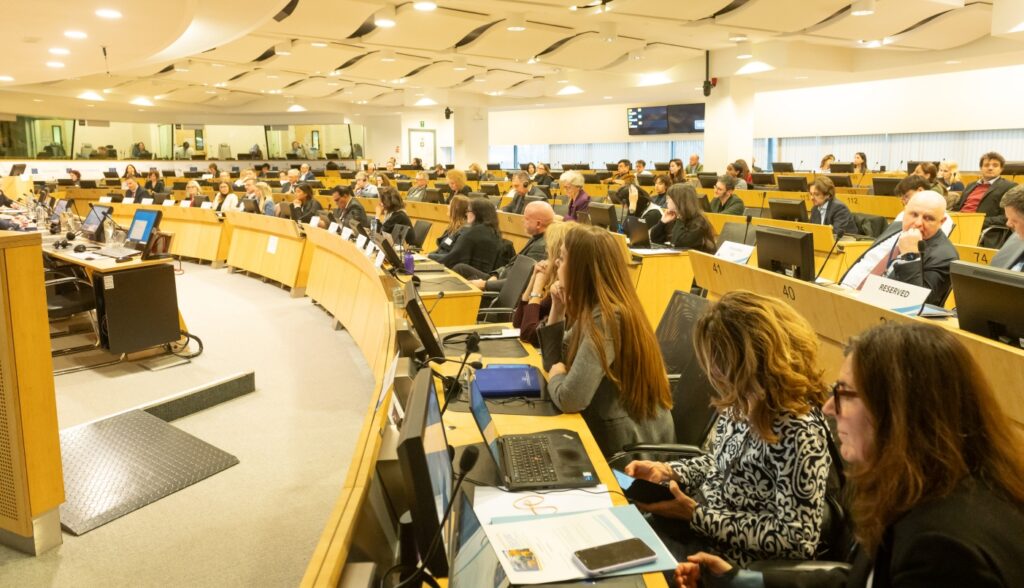
To provide food for thought for our second round table discussion, Jens Henriksson highlighted the impacts of non-compliant global platforms beyond product safety and unfair commercial practices. I tried to digest his longlist of often overlooked consequences (ranging from shifts in market structure over limited circularity to deteriorating labour conditions) with my panel members
- Stephen Russel, Director-General at ANEC, the European consumer voice in standardisation
- Eva Bille, Head of Circularity at the European Environmental Bureau
- Tomas Prouza, President of the Czech Trade and Tourism Association
- Annika Flaten, Director of Commerce and Tourism at UNI Europa
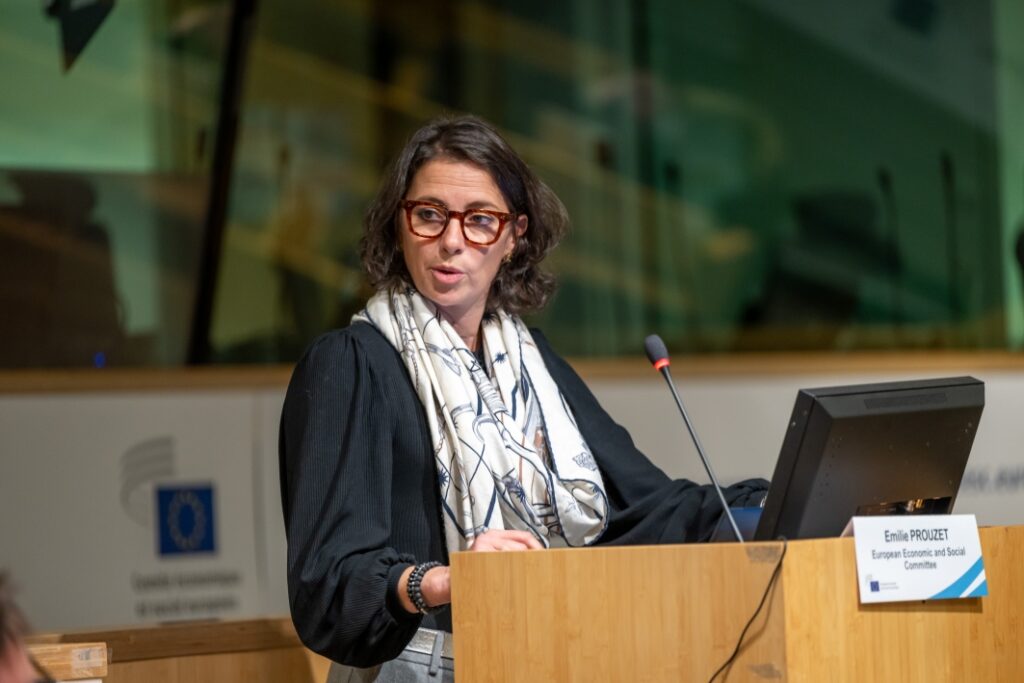
After such a rich and thought-provoking program, I was delighted (and a little bit relieved 😅) that Emilie Prouzet eloquently summarized the key take-aways in only 5 words:
- urgency
- volume
- common
- environment
- solutions
“Europe is not for sale.
We have the facts.
We have the toolbox.
We have the mobilisation.
Now we need resolve.
Because what is at stake is the integrity of our market, the safety of our citizens, and the fairness of our economy.”
Leave a Reply